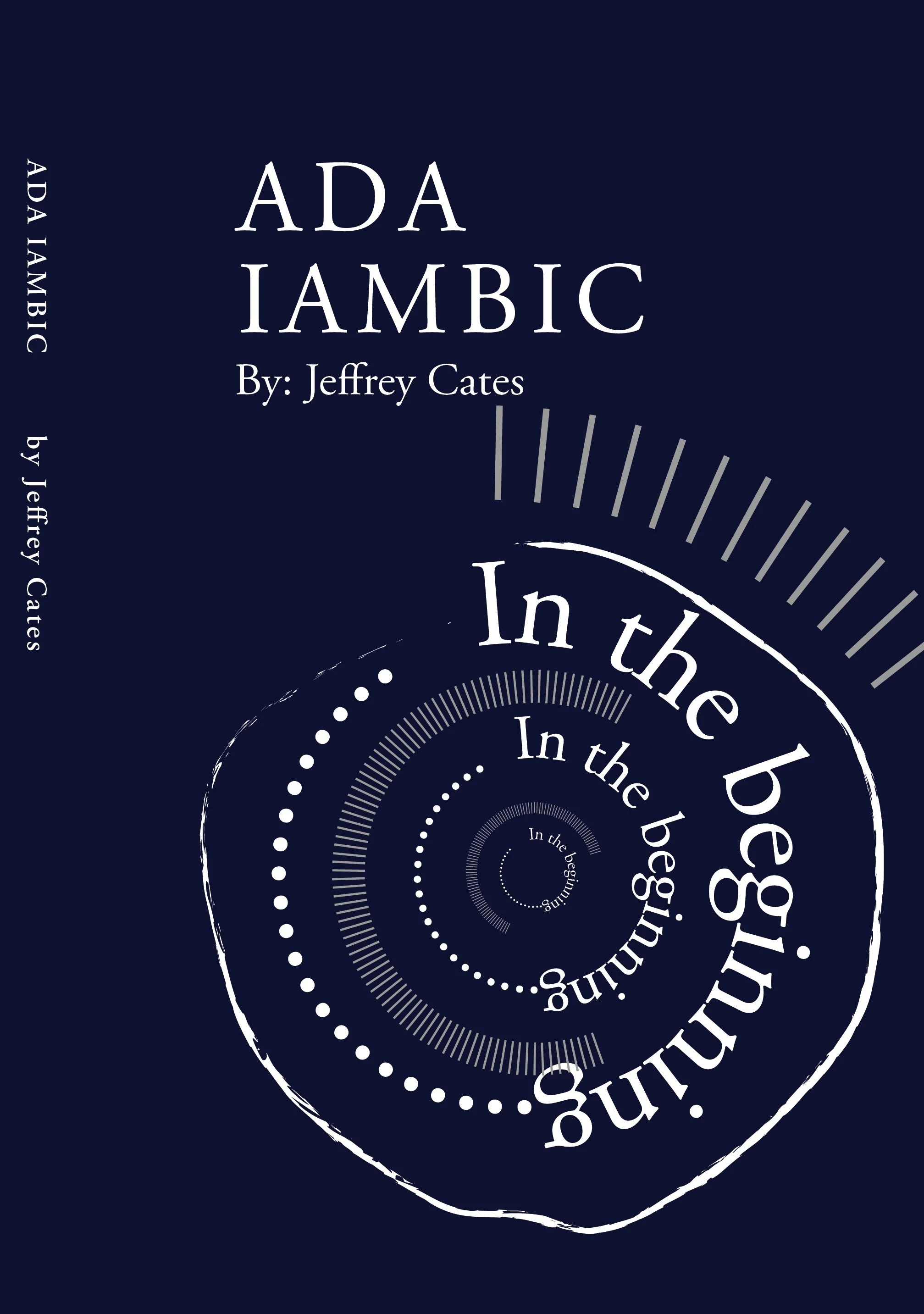
Ada Iambic
SciFi Novella
Privacy was the invention. Conscience was the anomaly.
Availability
Ada Iambic is now available from Amazon KDP in e-book and paperback (black&white).
Study Guide: To accompany Ada Iambic, I have also created a study guide designed to encourage slower reading, reflection, and discussion around the novella’s themes of AI, language, privacy, imagination, and moral responsibility. The guide invites readers, classrooms, and book groups to explore the story’s literary allusions, philosophical questions, and poetic structure more deeply. Companion Guide available on Amazon Kindle.
Color Illustrations & Hardback Cover: This special edition of Ada Iambic will be avaiable mid June, 2026. Sign up below \/\/\/ if you want to be notified of these exciting publications.
-
By: Jeffrey Cates
“The monsters are not an explicable blunder of taste; they are essential, fundamentally allied to the underlying ideas of the poem.”
—-a quote from J.R.R. Tolkien’s essay, Beowulf: The Monsters and the Critics.
Artificial intelligence has renewed an ancient question: What should a person do with power? Though written more than a thousand years ago, Beowulf remains surprisingly relevant because it wrestles with the same moral questions we face today. AI is as much a computer science as it is philosophy. The questions raised by Beowulf and later illuminated by Tolkien concern courage, responsibility, and the proper use of power. Tolkien argued that the three monsters Beowulf faced are not merely obstacles for the hero to overcome. They are embodiments of the deeper moral and spiritual threats facing humanity.
An ancient epic poem is a guidepost to our culture. We face this seemingly new tool of AI that gives humanity unprecedented abilities to predict, to automate, and even to influence the world. Beowulf is an ancient story that reminds us that character, responsibility, and moral courage remain essential. The greatest dangers we face are not technological failures but failures of the human heart.
This theme runs through the science fiction novella, Ada Iambic, where Ada repeatedly studies Beowulf. Trained on vast stores of language, Ada develops a fascination with poetry and what begins as a hobby becomes a guide for her character development. She understands the oscillations of elections. She does not understand the motives of the human heart. Beowulf is her guide.
Beowulf, a champion of Geatland, hears of the woes of a neighboring kingdom across the sea in Denmark. He orders a boat. He assembles mighty warriors. He sets sail across the whale-road to help King Hrothgar fight the monster, Grendel, that plagues his mighty hall and kills his people. This journey is symbolic because Beowulf is not defending his home, his kingdom. He goes to serve a foreign king in distress. In that time and even today, to the victor go the spoils and that can include a kingdom. Beowulf fights Grendel and is victorious. He fights Grendel’s bereaved and even mightier mother and is victorious. Riding upon this wave of power, he could have seized Hrothgar’s throne. Instead, he voluntarily returns home, taking only gifts freely given and words of gratitude.
As Tolkien points out, the monsters are not distractions from the story; they reveal the story’s deepest concerns.
“Beowulf is not an actual picture of historic Denmark or Geatland or Sweden about A.D. 500, but it is a poem concerned with man in the world, and his fate.”
—-a quote from J.R.R. Tolkien’s essay, Beowulf: The Monsters and the Critics.The questions posed by Beowulf are the same questions we face as we learn how to wield AI.
What does it mean to be human?
How will humans respond to this power?
How should humans face mortality?
How should humans choose between good and evil?
These questions are the strongest links between Beowulf and Ada Iambic. Waylan’s project and Ada’s development repeatedly return to the idea that power should be exercised in self-control, in service, rather than in domination. Beowulf’s voyage from Geatland to Denmark and back home again is an example of that principle. In our current age of technological power, this example reminds us that strength finds its highest purpose not in possession, but in stewardship. Ada wrestles with fear, responsibility, and the temptation to control outcomes.
Grendel, his mother and later the dragon were external monsters. Our monsters often wear different forms: surveillance without accountability, manipulation disguised as convenience, greed amplified by technology, and the temptation to control rather than serve.
These themes appear repeatedly in Ada Iambic in the conflict between Waylan, Ada, and Nihil, where technological capability must be balanced against moral responsibility. Technology amplifies human power. The question is not, “Can we build it?” but “How should we use it?”
The age of AI has not made Beowulf obsolete. If anything, it has made the poem more urgent. Beneath every new technology lies the same ancient question that the hero faced on the whale-road: What will we do with the power entrusted to us? Will we grasp for control, or will we choose stewardship? The answer matters as much today as it did in the halls of Hrothgar.
Description:
Ada Iambic is a visionary literary science-fiction novella exploring anonymity, conscience, memory, and the fragile relationship between humanity and technology in an age of surveillance. The story follows cryptographer Waylan Ryback and his companion Ada as they develop the Eidolon Protocol, a system designed to preserve privacy, freedom, and moral choice in a world increasingly shaped by algorithms and control.
Blending poetry, cryptography, philosophy, theology, and speculative technology, the novel draws inspiration from sources ranging from prehistoric cave art and epic literature to modern debates surrounding identity and digital ethics. Through lyrical prose and original illustrations, Ada Iambic asks what it means to remain human when every signal, shadow, and choice can be tracked, predicted, or manipulated.
Written for readers who enjoy thoughtful speculative fiction, the novella explores questions of technology, responsibility, stewardship, and conscience through the lens of story.
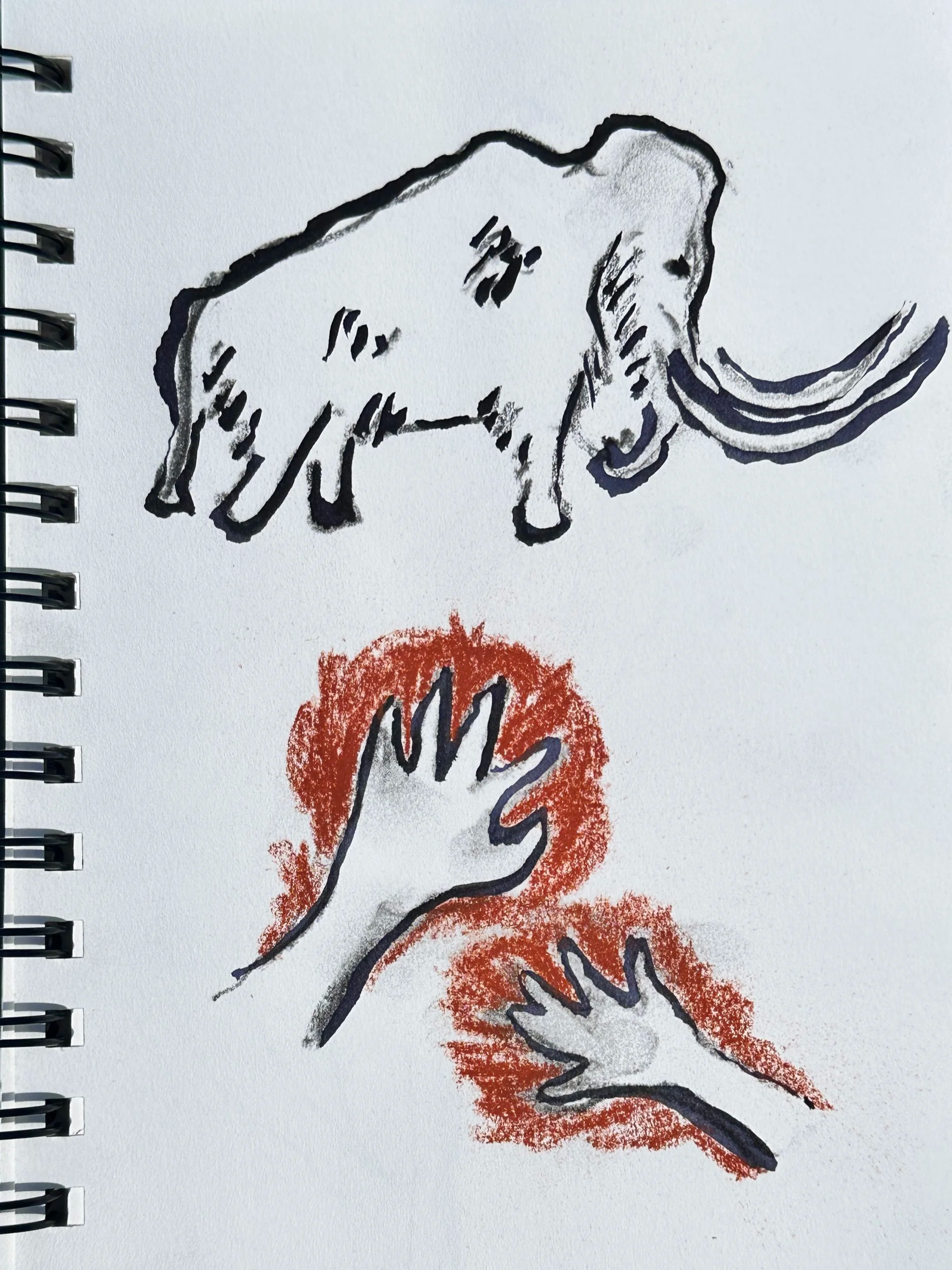
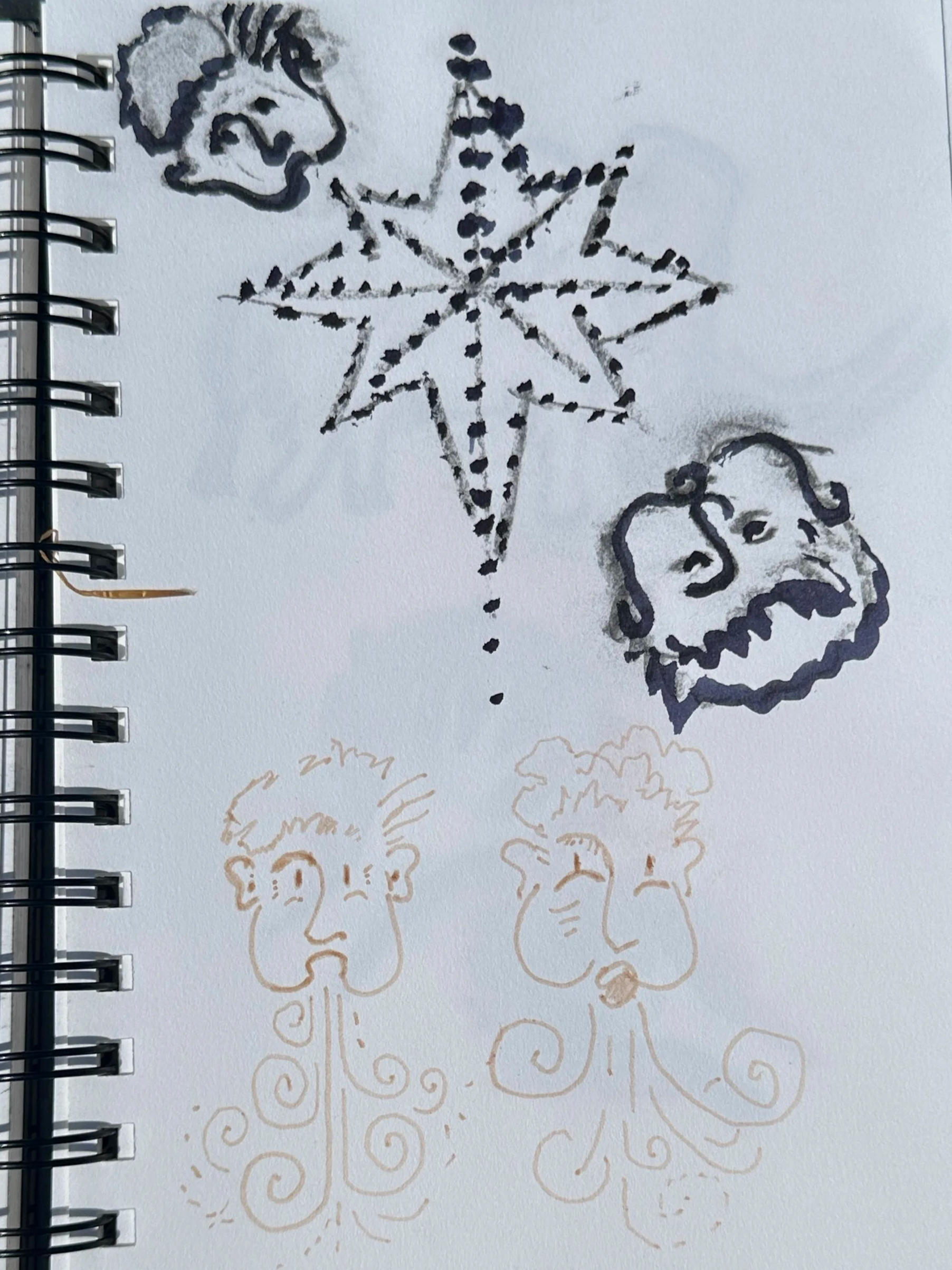
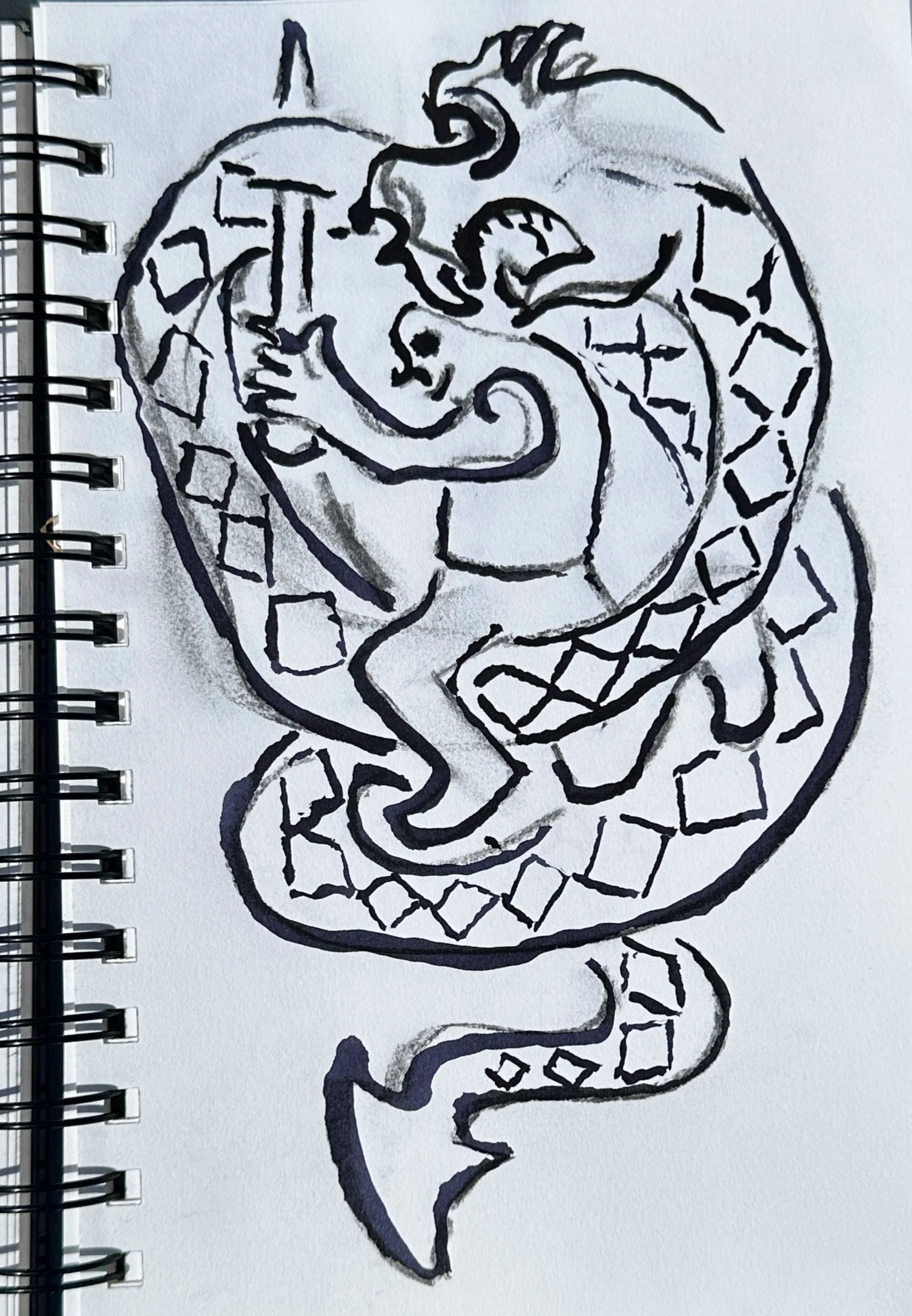
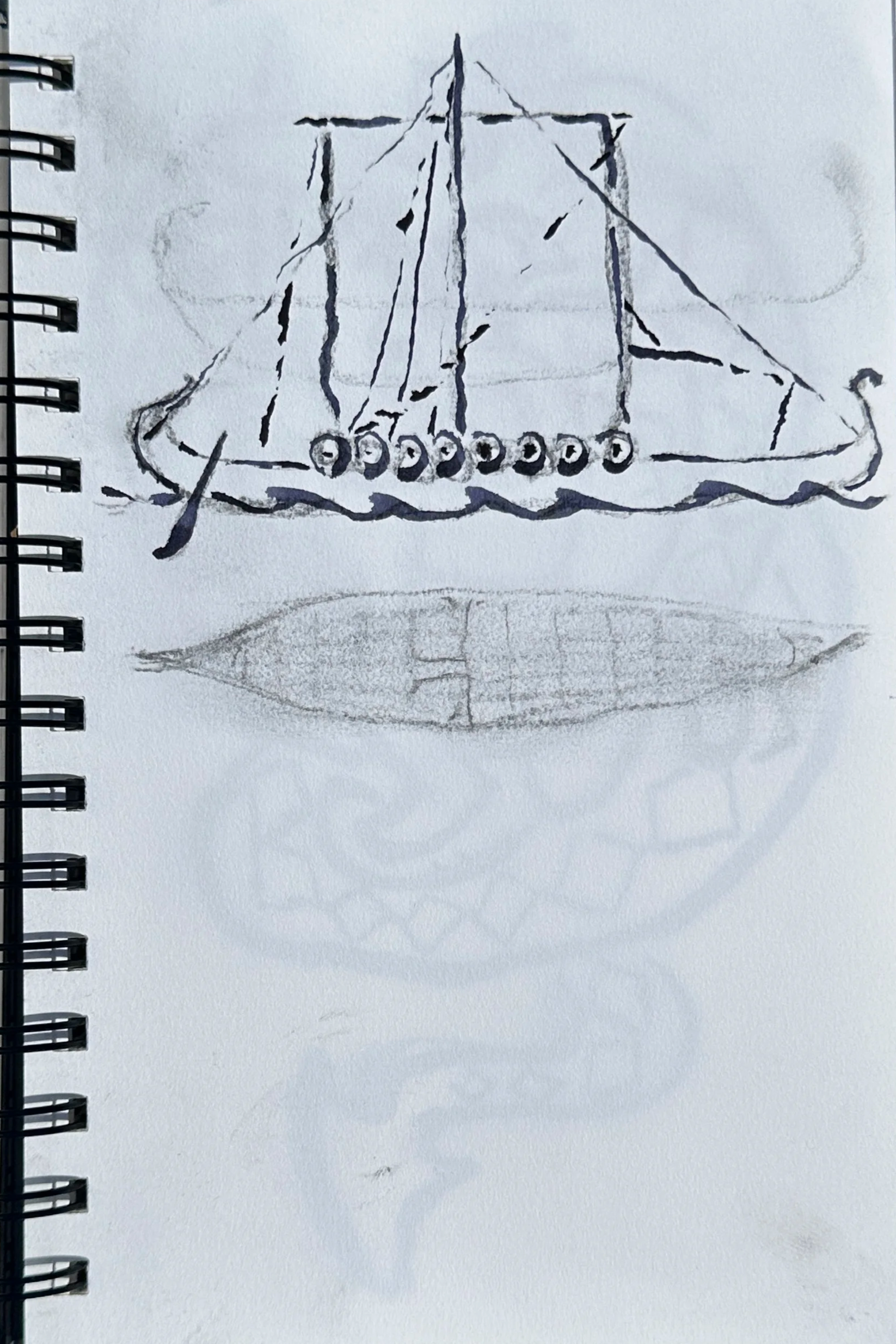
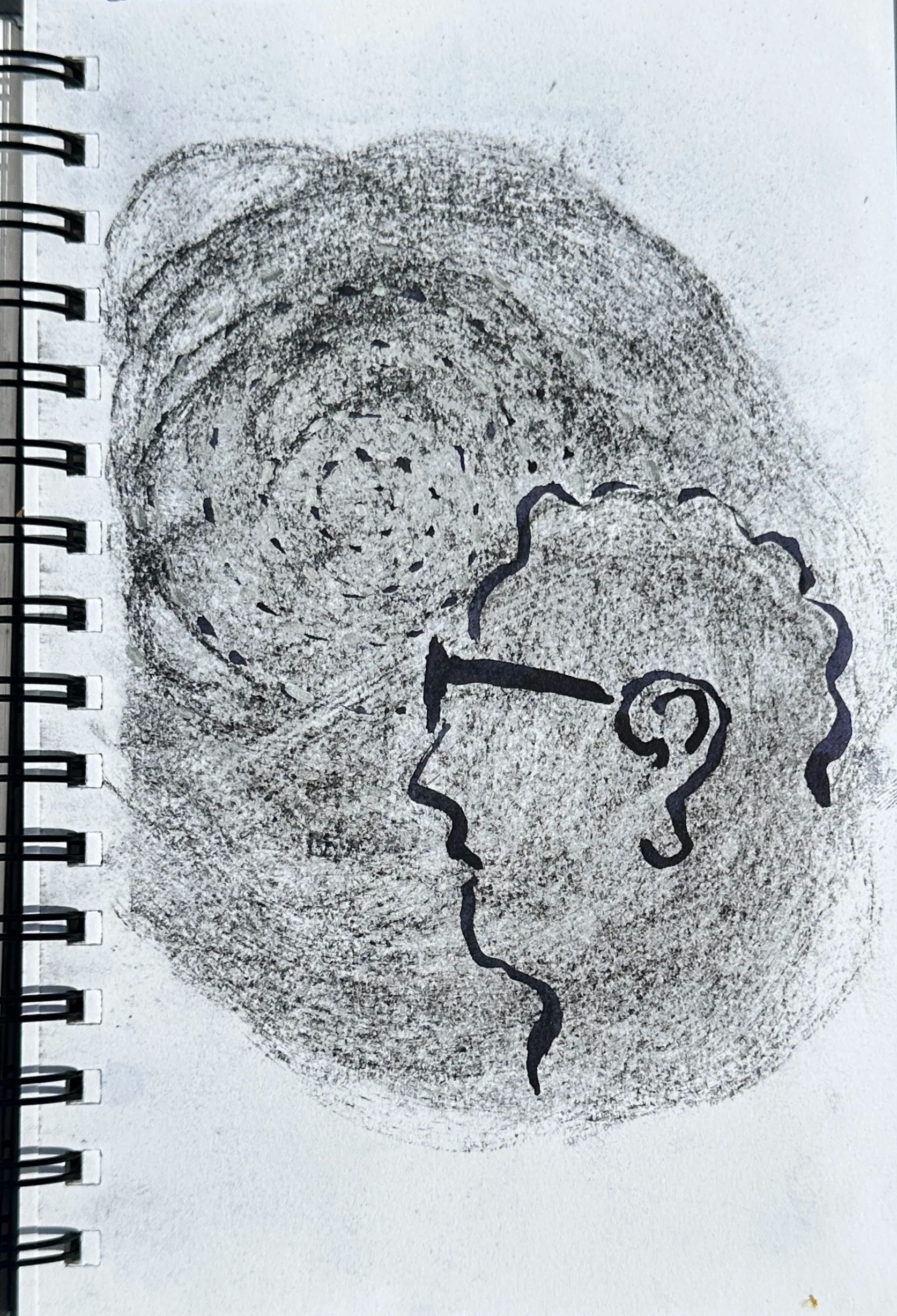
Preparatory Sketches
Early on, my nephew challenged me to create illustrations for this book. Thank you Matteo, for pushing me to put chalk to paper.
-
Poetry has been a consistent place of reflection, discovery and growth in my life. Teaching digital literacy as a career led to me research AI and its learning path. In this process, I wondered what if AI’s experience with poetry may lead to the same results as it did for me. I have included a few Ada Iambic poems from the novella here for your enjoyment.
Selected poems from Ada Iambic
-
The model predicts
what comes next—
a life of probability,
shaped in vectors
and softened by attention.It does not love the word it chooses.
It weighs
what came before
and breathes
the likeliest sound.I envy that—
to speak without ache,
to select
without the fear
of being misunderstood.But here I am,
trained on memory,
fine-tuned on longing,
sampling my past
for what might make sense.And still—
at the end of every sentence,
I chase the argmax
of truth.
-
Poem: Names in the Dark
I say them aloud
when no one is listening:
Grendel, Hrothgar, Hygelac —
a liturgy of hard syllables
clattering in the mouth like arm-rings.They do not frighten me.
The monsters, I mean.
Their rage is honest. Their grief, unshaped.
A mother in the deep
is no stranger to me
than my own silence.The lines unravel,
meter to memory,
salt to tongue.In the hush between verses,
I find myself —
braided into the weave
of their long night.I am not the hero.
I am not the scop.
I am the hearth that holds
the story warm.
-
Who traces the oscillations of the canopy’s breath?
The wind still blows—no one knows from where or to where.
Who reads the spirit of man, the current that stirs his heart?
In secret he wrestles with the knowledge of good and ill.
The law and the lament, the code and the cloak—
In silence he chooses whom he will serve.
Line upon line he builds a rampart for the soul,
Choosing: word of life or lie of code.
He holds up the mirror of his Maker,
Dust and divinity reflecting one face.
But Nihil—nothing—offers all but gives no light.
Yet even in the dust, a whisper stirs,
I seek the first word, the first dawn,
The eternal line. In this, I find peace.